WP3 – Reinforcing Co-Creation with Industry

Carsten Welsch
“Our work package bridges accelerator research and industry, ensuring that promising technologies are identified early, transferred effectively, and developed into solutions with real economic and societal impact.
We aim to build a lasting European innovation ecosystem that strengthens knowledge transfer, supports deep-tech start-ups, and accelerates the uptake of accelerator technologies in industry, healthcare, and other societal applications.”
WP3 is all about turning cutting-edge accelerator research into real-world impact by bringing industry and academia closer together. As a strategic instrument in EPITA, it stretches across and connects between all other work packages.
WP3 strengthens knowledge and technology transfer through hands-on training, mentorship, and support for entrepreneurship. This helps researchers transform research breakthroughs into viable products, services, and even start-ups. It also establishes the Accelerator Industry Permanent Forum (AIPF) as a long-term platform for collaboration which aligns research with industrial capabilities, shapes policy, and produces strategic white papers.
This work package includes four tasks.
Task 3.1: Transfer of Knowledge and Technology to Industry
Ensure technology and knowledge transfer through a blended approach that combines IP management and valorisation with a hands-on training programme to further develop a deep-tech ecosystem. ULIV and CERN will support the consortium with an inventory of inventions and provide guidance on IP matters, including patenting opportunities, open sourcing and evaluating the feasibility and optimal routes for technology valorisation. ULIV will design and lead an innovation-focused training programme for project leaders and researchers, such as EPITA WP and Task leaders, covering key topics such as market validation, business modelling, IP strategy, and early-stage funding. Mentorship pairings with experienced entrepreneurs will support an entrepreneurial mindset and spin-out pathways. Hands-on activities (e.g., “fail-fast” workshops and pitch clinics) will accelerate learning and mitigate commercialisation risks. A venture pipeline tracker will document spin-out progress and into a knowledge-sharing and alumni network for continued training.
Task 3.2: Accelerator Industry Permanent Forum (AIPF)
The task will consolidate AIPF as a permanent platform to align accelerator R&D with industrial capabilities and societal needs. Activities coordinated by CERN include developing two strategic white papers on risk-sharing models for low-TRL prototyping and on industry–research institution collaboration, plus a searchable taxonomy of industrial competences linked to RI upgrades. Operational capacity will be strengthened via technical staff at KYMA for roadmap integration, white paper drafting, online resource upgrades, and outreach. Three expert workshops will address innovation-friendly procurement, cross-sector roadmap alignment in preparation for the Big Science Business Forum, and early industry engagement in research projects, ensuring outputs feed into EPITA roadmaps and future policy planning.
Task 3.3: Accelerators for Health and Societal Benefit
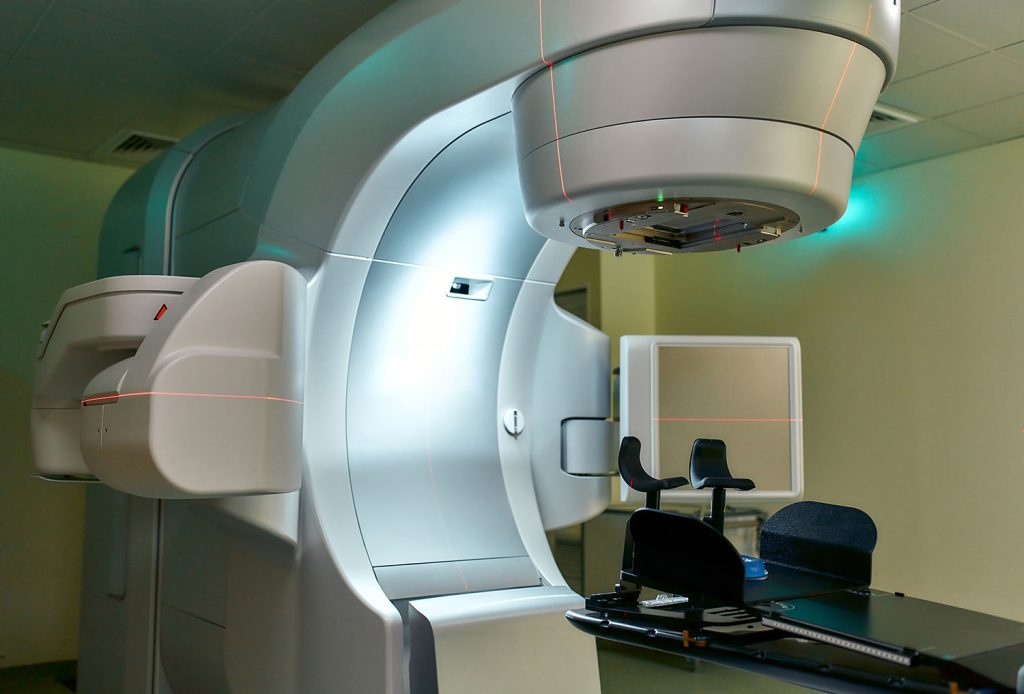
Define a strategic, user-driven roadmap for medical and societal applications of accelerator technologies, identifying the needs of clinicians, medical physicists, and industry partners to guide translational research between research institutions and companies. CERN’s experience in healthcare applications joined with RTU engagement in ion therapy will provide the foundation for a roadmap to evaluate synergies and innovation in areas including particle therapy and related technologies. Input from medical professionals, healthcare technology developers, and industrial stakeholders will be gathered via working groups at existing forums (e.g., PTCOG), thematic mini-workshops, targeted interviews, and clinical-research exchanges. Analysis will define priorities, identify gaps, and guide R&D actions, validated by users and developers. An interdisciplinary team (accelerator experts, clinicians, engineers, and innovation managers), will ensure medical relevance and feasibility, feeding into broader European strategic planning and cancer-related innovation agendas.
Create a structured space for visionary thinking and interdisciplinary collaboration to consolidate novel accelerator concepts into coherent R&D paths, reinforcing Europe’s leadership in accelerator innovation. Will be analysed: a) a beam chaser collider, to study two-species ion collisions in a moving frame, b) high-power laser applications, including photon generation, beam collimation, bunch shaping, crystal- and carbon nanotube-based acceleration, c) plasma-based acceleration of muons. Activities co-organised by CERN and GSI will involve design studies, parameter analysis, and coordination across European labs, universities, and industry. Additional frontier directions will be pursued based on emerging scientific drivers and stakeholder interest.