WP10 – Surface Treatments for Niobium SRF Cavities
David Longuevergne
“This work package is important because Niobium technology for SRF cavities has not yet reached its full potential.
We hope that through the work in the EPITA project we can make European SRF infrastructure more unified and fully qualified for the next generation superconducting accelerators.”
WP10 aims to produce and qualify high-quality factor and high-gradient cavity prototypes at multiple frequencies for future European and international projects (e.g., EuXFEL upgrade, PERLE, ILC, FCC). It will support surface treatment, testing, and process optimisation during SRF cavity fabrication from academic research to industrial-scale implementation, validate cavity prototypes across European test facilities and qualify partner surface treatment equipment for ongoing improvement, and foster R&D on performance recovery mitigation strategies to enhance long-term operation of large European facilities such as ESS.
Task 10.1: Surface Preparation for High-Q at High-G
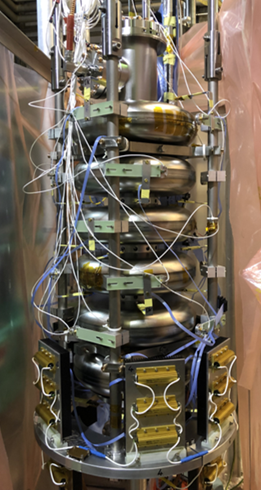
Heat treatments of SRF cavities at medium temperature (~350°C), exhibit an improvement in the quality factor Q0 at moderate accelerating electric field strength Eacc. With a process combining heat treatments in series, not only favorable for high Q0-values but additionally high gradients of up to 40 MV/m can be achieved. This offers great potential for upgrading modern LINACs with new high usable performance. To validate this result, a certain amount of statistics of RF cold test are needed and cross-checks of the prototypes in different laboratories to check repeatability and robustness of the process (Task 10.4) in view of transferring this technology to industry
Task 10.2: HPR and Cleanroom Assembly Improvements
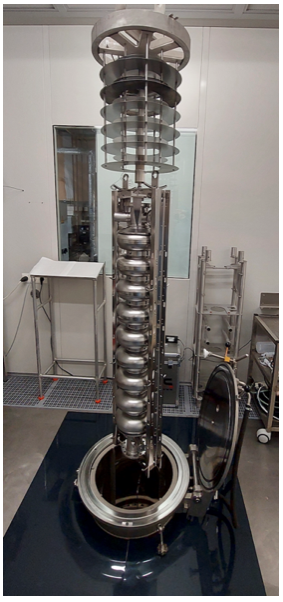
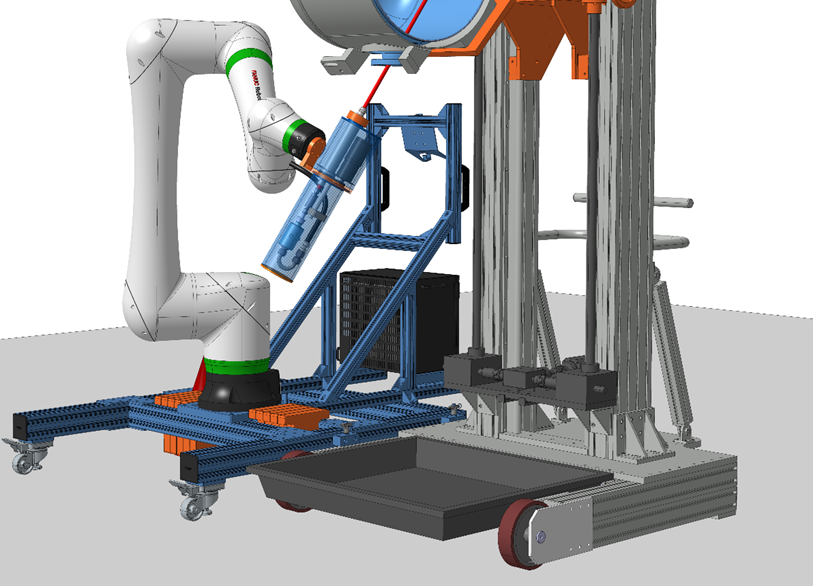
Several laboratories are now using cobot-assisted processes in clean rooms to facilitate and improve the work of operators. Cobots are especially adapted for time consuming and repetitive tasks (e.g. blow-off cleaning of components, particle counting) and for critical assemblies and precise positioning (e.g. power couplers and bellows installation). This task will aim at gathering best practices and lessons learned among European and International partners but also extend cobot capabilities and go beyond state of the art in particular for HPR processes.
Task 10.3: Performance Preservation and Recovery
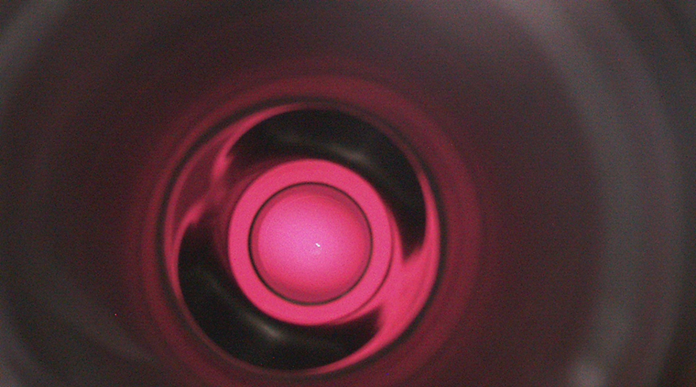
The goal of the task is to develop and consolidate techniques aimed at preserving and possibly recovering the performance of cavities. Preserving high-Q/high-G cavity performances requires state-of-the art infrastructures. In this respect, in the task we aim to improve test infrastructures and share the know-how present in the partners laboratories. In case of degraded performance, possible recovery methods regarding performance are mandatory. Plasma processing is one of the techniques that may be implemented, first in R&D and later in operation. Indeed this technique has been proved very promising but its full recovery potential has not been yet reached.
Task 10.4: Test and Diagnostics
This task focuses on the validation of superconducting radio-frequency (SRF) cavity performance through advanced diagnostics, with the goal of collecting a consistent and shareable dataset to enable cross-comparisons between cavities subjected to different surface preparation procedures. Understanding how specific treatments affect performance requires detailed and reliable measurements, particularly during vertical testing where many key parameters can be isolated and studied. By establishing a reliable diagnostic framework and standardized dataset, this task will enable a deeper understanding of the relationship between surface preparation methods and SRF cavity performance.