WP8 – High-Temperature Superconducting Magnets

Ernesto De Matteis
“Our work package is essential to unlock the deployment of high-temperature superconducting magnets in future accelerators by delivering more compact, energy-efficient, and sustainable magnet technologies.
We aim to demonstrate cryogen-free HTS magnet systems and fast-ramping HTS cables at a level of maturity that enables their adoption in next-generation accelerator facilities.”
The objectives of WP8 are to:
- Develop next-generation HTS magnet systems based on ReBCO conductors, including energy-efficient steady-state (7 T at 20 K) split coils and fast-ramping (10 kA, 0.5–1 T/s at 4.2 K) cables.
- Implement scalable, cryogen-free cooling systems using compact solutions to eliminate the use of liquid helium, improve sustainability, and reduce operational complexity.
- Overcome key technical barriers to practical deployment of HTS magnets in accelerator environments, such as reliable conductor quench detection, effective thermal stabilisation, mechanical robustness, and control of field quality under operational conditions.
This work package includes four tasks.
Task 8.1: Coordination and HTS Strategy
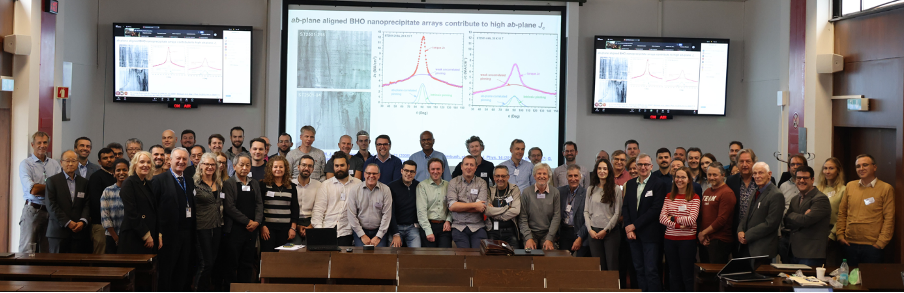
INFN and CEA will support planning and monitoring activities, while CERN will coordinate the HTS Strategy Group launched under I.FAST to align HTS R&D efforts across Europe and monitor progress toward accelerator deployment and organise dedicated HiTAT (High-Temperature Superconductors for Accelerators and Technologies) workshop series with INFN support to build community and refine roadmaps.
Task 8.2: HTS Conductor R&D at 20 K
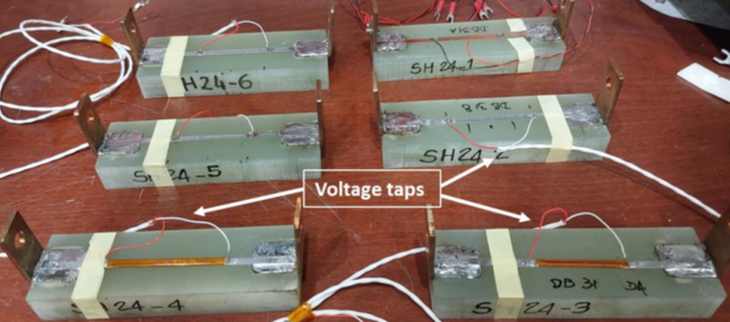
Characterise and qualify HTS conductors under operational conditions compatible with accelerator magnets, particularly at 20 K, through evaluation of different tape and cable architectures, electrical and thermal performance measurements, mechanical testing, and quench detection testing conducted at CIEMAT. INFN and CEA will contribute to testing and comparative studies aimed at integrating the cables into the magnet (Task 8.3). CERN will provide test facilities and expertise for cold testing at variable temperatures, contributing to cable validation under conditions relevant to magnet prototype (Task 8.3).
Task 8.3: Energy-Saving Split Coil at 20 K
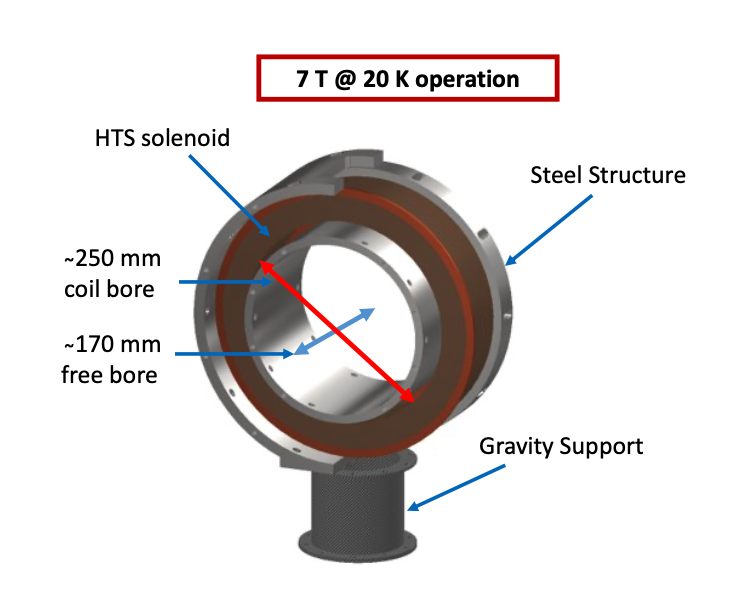
Design, construct, and validate a 7 T split coil magnet operating cryogen-free at 20 K, with provisions for higher temperature studies in the 50–60 K range, featuring a 150–200 mm warm bore and ~100 mm compact coil length. Magnetic, mechanical, and thermal design will ensure stable operation and safe energy dissipation (0.5–1 MJ). INFN will design and build the complete solenoid using a stack of pancake coils. CEA will develop a second, complementary pancake coil for comparative analysis. Both coils will undergo extensive cryogenic testing to evaluate thermal and mechanical stability. Arquimea will design and provide the cryogenic infrastructure, including outer walls, thermal shielding, and current feedthroughs, enabling integration into a fully cryogen-free setup. After qualification, the prototype magnet will remain at INFN as a platform for further HTS validation, and community-accessible tests (e.g. RF cavity behaviour in background magnetic fields).
Task 8.4: HTS Cable for Fast Ramping Operation
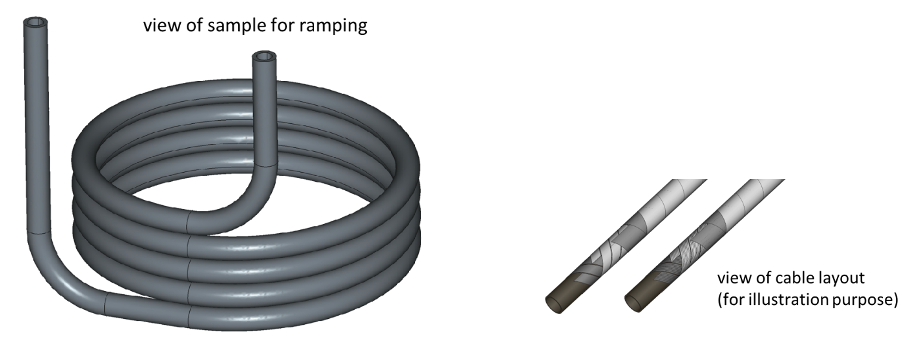
Develop a high-current (10 kA) HTS cable optimised for fast-ramping operation in the range of 0.5–1 T/s. The cable will be integrated into a test solenoid and validated across a range of temperatures (77 K, 10 K, 4.2 K). Activities include the design and manufacturing of the conductor, the development of low-resistance, high reliability splices, and testing of AC losses and dynamic stability. GSI will design and test the fast-ramping cable and integrate it into the magnet demonstrator. SUBRA will produce the HTS tape and contribute to winding processes. IEE will manufacture and characterise the cable, with the associated partner UT providing facilities and support for cryogenic testing over a broad temperature range.