
EPITA’s role in emerging medical technologies presented at CERN Accelerator School
Many innovations being developed in the project will be directly or indirectly beneficial for future medical solutions
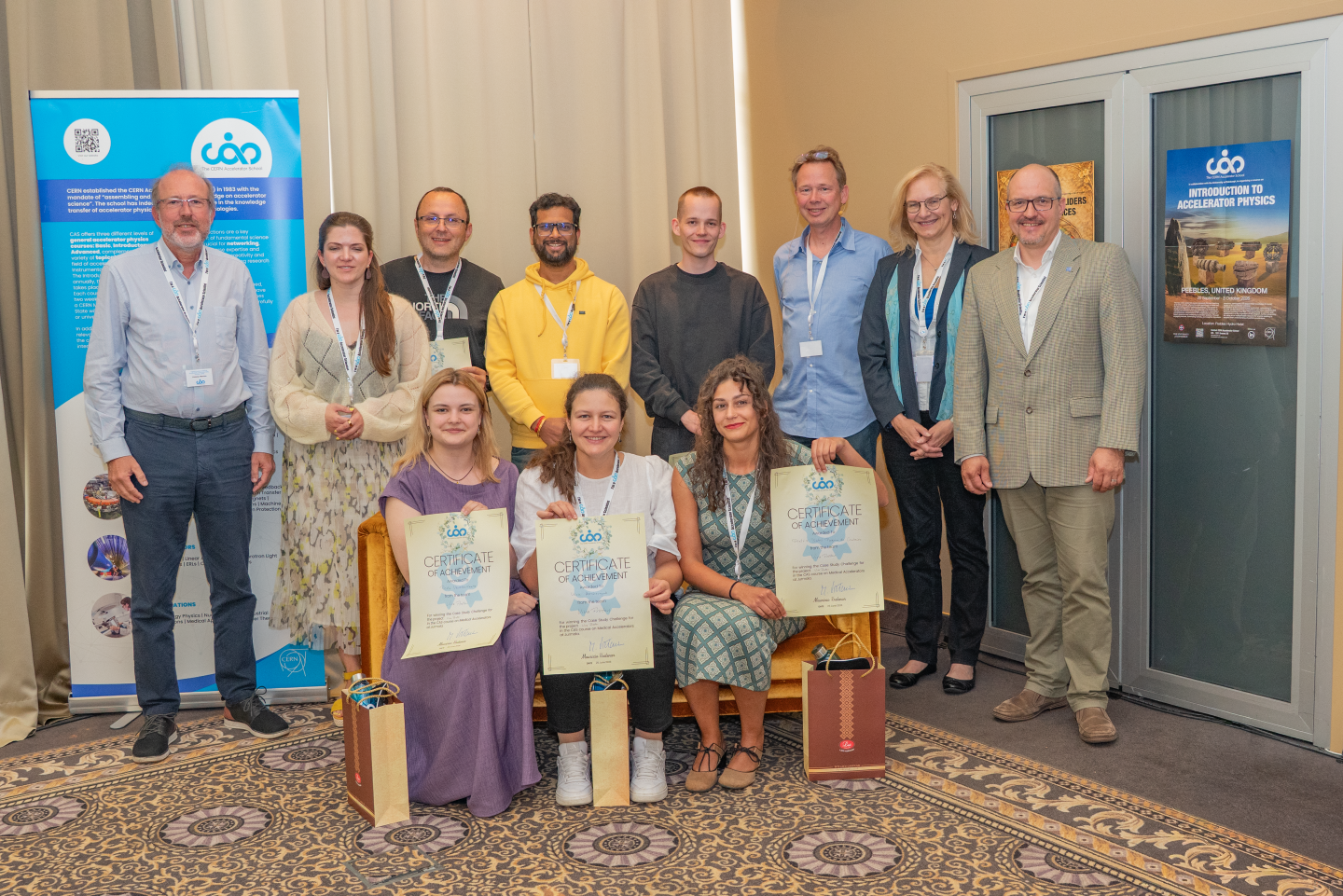
The role that the EPITA project plays in advancing accelerator technologies for medical applications was presented at a recent topical CERN Accelerator School (CAS), held in Riga, Latvia from 15 to 26 June, 2026.
The course focused on the widespread use of accelerator applications in medicine, and was attended by a mix of early-career professionals, medical experts, postgraduate students and others interested in the field.
As part of the 10-day programme, Toms Torims, EPITA’s project coordinator, delivered a presentation on the emerging technologies being developed through the project, in collaboration with industry.
These include thin films for radio frequency cavities, laser-plasma accelerator technologies, high-temperature superconducting magnets, high-brightness electron injectors, and more.
He explained how EPITA is taking these technologies to the next level of maturity with the development of 22 working prototypes, as well as building up to industrial-scale production in certain cases.
Many of these technologies will directly or indirectly find their way into the medical field in the future, whether by making medical accelerators more performing, or improving emerging technologies that could shape the future of healthcare, such as high-temperature superconductors and advanced materials.
Maurizio Vretenar, an expert in accelerators for medical applications and honorary associate at CERN, attended CAS and commented on the importance of EPITA and the medtech sector.
“Medicine is one of the major technology drivers of our time – combining the pull of an ageing population’s needs with the push to apply deep tech to healthcare,” he said, speaking after the event.
“EPITA is ideally positioned to contribute to this effort by developing new accelerator technologies in a collaborative, interdisciplinary environment and translate them into medical applications.”
Alongside the technical advancements being carried out by EPITA, Torims also stressed the benefits of working in a collaborative, European project, as well as the advantages of networking and sharing ideas, and the importance of building close ties between researchers and industry.
The CAS course on medical accelerators was put together in collaboration with Riga Technical University. To find out more about the school and the upcoming courses, see the CAS website here.